Fake invoices are becoming a major problem in 2025 – especially across e-commerce, B2B payments, freelancers, accounting teams, and social media scams.
Fraudsters now use:
- Edited screenshots
- Altered invoice amounts
- Fake templates
- AI-generated invoices
- Modified PDFs and JPEGs
- Recycled invoice numbers
This is why invoice authenticity checks are critical.
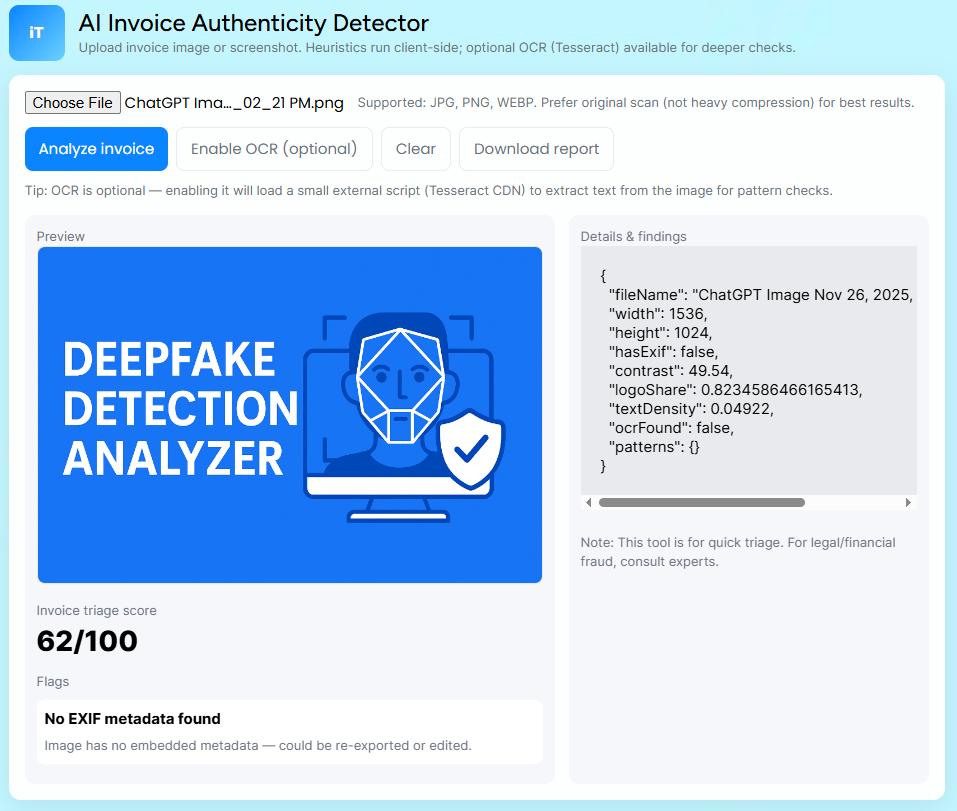
The AI Invoice Authenticity Detector from iLuvTool allows anyone to upload an invoice image and instantly scan for manipulation patterns.
Everything runs 100% locally on your device – no uploads, no storage.
What This AI Invoice Detector Actually Does?
The tool uses a combination of heuristic-based checks:
✔ ELA (Error Level Analysis)
Detects regions with abnormal compression and editing.
✔ Noise Pattern Comparison
Edited text or numbers often have different noise.
✔ Metadata Inspection
Fake invoices usually have missing EXIF or suspicious metadata.
✔ OCR Text Extraction (Optional)
Extracts text via Tesseract to identify:
- Inconsistent font sizes
- Spacing anomalies
- Misaligned amounts
- Tampered fields
✔ Pixel-Level Hotspot Mapping
Highlights suspicious zones that differ from the rest of the image.
This is not forensic-level — but it gives fast, reliable triage for business and personal use.
Conversational Q&A:
“How can I check if an invoice is authentic?”
Upload the invoice to the AI Invoice Authenticity Detector. It scans for manipulated regions, metadata issues, inconsistent fonts, and edited amounts.
“Is this invoice edited?”
If the totals, bank details or text appear different in noise or compression, it may be edited.
“How do scammers fake invoices?”
They change bank accounts, modify amounts, or edit dates on screenshots.
“Is it safe to upload my invoice?”
Yes – the tool runs locally in your browser.
“Can AI detect invoice fraud?”
AI can highlight editing patterns and inconsistencies, making it easier to spot fake or modified documents.
How to Use the AI Invoice Detector (Step-by-Step)
Step 1 – Upload the invoice
Use original image if possible.
Step 2 – Tap “Analyze invoice”
The system scans:
- Noise
- EXIF
- Compression
- Regions
- Edits
Step 3 – Enable OCR (Optional for deeper checks)
OCR helps detect:
- Font mismatches
- Altered numbers
- Manual edits
Step 4 – Review Flags
RED = high risk
YELLOW = suspicious
GREEN = normal
Step 5 – Download the report
Useful for:
- Business verification
- E-commerce disputes
- Internal audits
- Document review
What Fake Invoices Look Like (Common Signs)?
People often modify invoices by:
- Editing the total amount
- Changing bank account numbers
- Altering dates
- Removing watermarks
- Editing screenshots with apps
- Replacing company logos
- Merging different invoice parts
Your tool detects many of these patterns.
Industries That Benefit from Invoice Authenticity Tools:
- E-commerce sellers
- Dropshippers
- Freelancers
- Small businesses
- Accounting teams
- Procurement
- Logistics
- Manufacturing
- Real estate
- Students receiving scholarship invoices
Warning: Invoice Fraud in Malaysia:
Scams increasing in MY:
- Fake Shopee/Lazada invoices
- Edited PDF invoices
- Modified bank accounts for payment diversion
- Fake courier/delivery invoices
- Fake repair invoices
FAQs:
Can scammers edit invoices easily?
Yes. Anyone can change totals or bank numbers using editing apps.
Does this detect PDF deepfake invoices?
The tool analyzes image-based invoices; convert PDFs to images first.
Is this safe for business use?
Yes – it’s private and device-side.
Can this tool verify tax invoices?
It can detect editing but can’t verify government tax registration.
Related Tool:
- Deepfake Detection: https://iluvtool.com/deepfake-detection/
Disclaimer:
This tool provides heuristic checks only and may not detect all manipulation. For legal or identity matters, consult an official authority or expert.
“Content reviewed and human-edited for accuracy.”